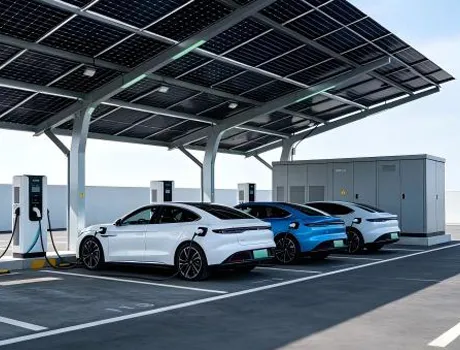
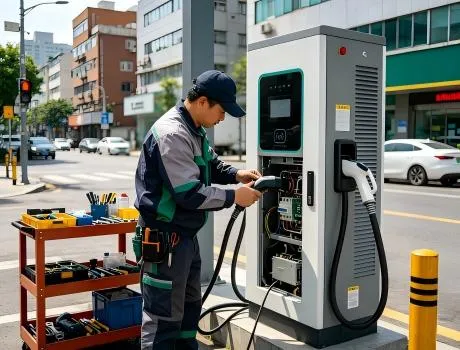
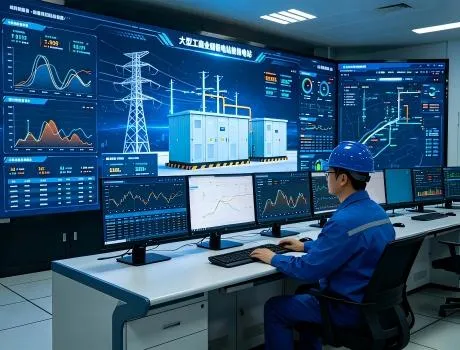
As electric vehicles (EVs) gain rapid popularity around the world, the demand for efficient and high-speed charging infrastructure continues to surge. While AC chargers are adequate for overnight home or workplace charging, they often fall short in meeting the needs of long-distance travel, commercial fleets, and busy public stations. DC Charging Piles, commonly referred to as DC fast chargers, have become the key solution for delivering rapid, reliable, and high-power charging to support the growing EV ecosystem.
A DC Charging Pile is a powerful electric vehicle supply equipment (EVSE) that converts alternating current (AC) from the grid into direct current (DC) and supplies it directly to the vehicle’s battery. This internal conversion allows for significantly higher power delivery and much faster charging times compared to traditional AC systems.In this guide, we provide a detailed overview of DC charging piles — covering their definition, technical principles, key advantages, practical applications, and future development trends.
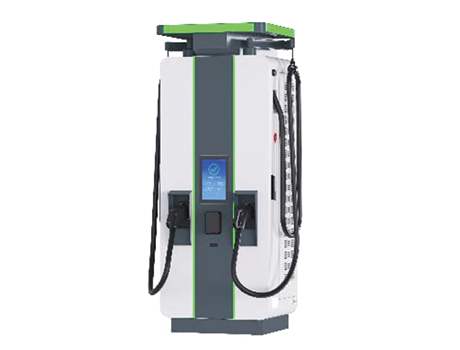
What Is a DC Charging Pile?
A DC Charging Pile is an advanced fast-charging system specifically engineered for modern electric vehicles. Unlike AC chargers, which rely on the vehicle’s limited onboard charger to convert power, DC charging piles handle the AC-to-DC conversion internally. This design enables high power output ranging from 60 kW to 960 kW, dramatically reducing charging time.
To accommodate different regional requirements, DC charging piles are developed in compliance with major international standards:
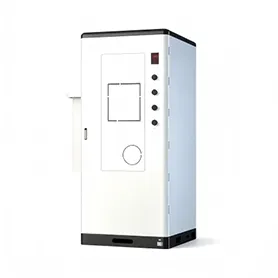
DC Integrated Charging Station: Includes 60-480KW Model A/B/C/D.
DC Wall-mounted Charging Station: Provideds 20-40KW Model A/B.
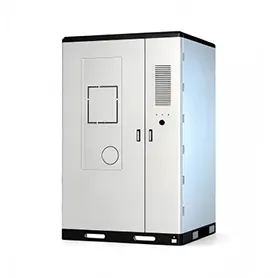
DC Split-Type Charging Station: Offers Split-Type Charging Pile 320KW-960kW.
V2G/V2H Charging Station: Includes V2G 7KW /11KW.
Integrated Storage & Charging Station: Integrated Storage & Charging 241kwh.
Mobile Energy Storage Vehicle: Mobile Energy Storage Vehicle 261kwh.
Many models also incorporate bidirectional charging capabilities such as V2G (Vehicle-to-Grid) , allowing energy to flow both to and from the vehicle.
Key Advantages and Technical Features of DC Charging Piles
DC charging piles stand out due to their superior performance and versatility. One of the most notable advantages is fast charging speed — most electric vehicles can reach 80% battery capacity in just 15 to 30 minutes, making them ideal for time-sensitive applications.
From a technical perspective, modern DC charging piles are equipped with advanced liquid cooling systems to maintain efficiency during prolonged high-power operation. They feature intelligent communication systems using protocols like OCPP, comprehensive multi-layered safety protections (including overcurrent, overvoltage, short-circuit, and insulation monitoring), and user-friendly interfaces with touchscreen displays, RFID authentication, and mobile app integration.
The ability to support multiple international standards ensures broad vehicle compatibility and simplifies deployment across different countries. Furthermore, V2G functionality transforms charging piles from mere power suppliers into active participants in smart energy networks, helping to balance grid load and integrate renewable energy sources more effectively.
When compared to AC chargers, DC charging piles offer higher power output, faster charging, better grid interaction, and stronger suitability for commercial and public use cases. These advantages result in higher utilization rates and improved return on investment for charging station operators.
Applications and Future Trends of DC Charging Piles
DC charging piles are now widely applied across numerous scenarios. On highways and service areas, they provide essential fast charging for long-distance travelers. In cities, they power busy public charging hubs serving private cars, taxis, and ride-hailing vehicles. Commercial fleets, including logistics and delivery companies, benefit greatly from their quick turnaround capabilities. Other important applications include electric bus depots, industrial parks, mining operations, and large logistics centers.
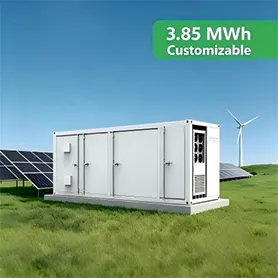
They are also increasingly integrated with renewable energy systems, such as solar and wind power stations, to create green charging solutions that support sustainable development goals.Looking to the future, the DC charging industry is experiencing rapid technological advancement. Key trends include the development of ultra-high-power chargers (350 kW to MW level), more efficient liquid cooling and power electronics, and wider adoption of bidirectional V2G/V2H systems. Artificial intelligence and cloud-based platforms are being used to optimize energy management, enable predictive maintenance, and improve user experience.
As governments worldwide push for carbon neutrality and higher EV adoption rates, the demand for reliable, high-performance DC charging infrastructure will continue to grow. Standardization efforts and cross-border interoperability will further accelerate the global expansion of charging networks.
Conclusion
In conclusion, DC charging piles represent a critical technology in the transition toward sustainable transportation. Their combination of speed, power, intelligence, and adaptability makes them indispensable for building the charging infrastructure of tomorrow.For more details, please view our products or contact our team.
FAQs
What is a DC charging pile?
A DC charging pile converts AC power from the grid into DC and delivers it directly to the vehicle’s battery, enabling much faster charging than AC chargers.
How fast can a DC charging pile charge an electric vehicle?
Most EVs can reach about 80% battery capacity in 15–30 minutes, depending on the charger power (typically 60 kW to 960 kW) and the vehicle’s battery capacity.
When should I choose DC charging over AC charging?
DC charging is ideal for highways, public stations, commercial fleets, and locations where vehicles need rapid charging within a short time. AC is better for longer parking periods.
Are DC charging piles safe?
Yes. Modern models include multi-layer protections such as overcurrent, overvoltage, short-circuit, and insulation monitoring, along with advanced cooling systems for stable high-power operation.
What is V2G technology in DC charging piles?
V2G (Vehicle-to-Grid) allows bidirectional energy flow, enabling the vehicle to supply power back to the grid or building when needed, supporting grid balancing and smarter energy use.
 English
 DC Charging Pile
  AC Charging Pile
  Inverter
  Residential Energy Storage
  Integrated Solar-Storage-Charging System
  Commercial & Industrial and Containerized Energy Storage
  Cloud Platform
  Photovoltaic Building Materials