Intro
Commercial electricity bills are painful. Demand charges, time-of-use rates, and grid instability — they all add up. That's where C&I energy storage comes in.
And the hottest format right now? The all-in-one, air-cooled unit.
Let's unpack it.
What Is an All-in-One C&I Storage System?
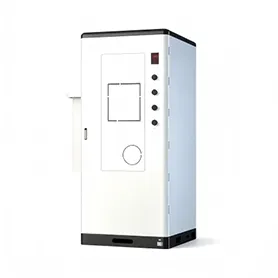
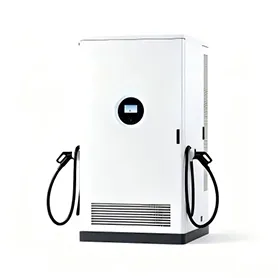
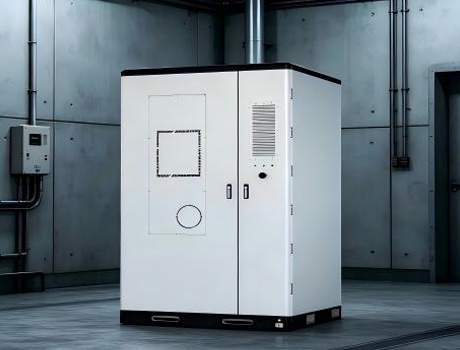
It's exactly what it sounds like — a single cabinet that packs the battery, battery management system (BMS), power conversion system (PCS), and energy management system (EMS) into one enclosure. No separate inverter rooms or external cooling units.
Think of it as a power bank for your factory, office building, or EV charging station.
Why Air Cooling?
Most people assume liquid cooling is always better. Not quite.
Air cooling uses fans to circulate air through the battery array. For C&I systems in the 50–500kWh range, it's often the smarter choice:
Simpler design — fewer moving parts, less to break
Lower upfront cost — no pumps, coolant, or heat exchangers
Easier maintenance — no coolant leaks to worry about
Perfect for indoor or mild climates — where ambient temperature stays reasonable
Liquid cooling still wins for very large systems (1MWh+) or extreme heat. But for most small to mid-sized commercial projects, air cooling gets the job done reliably.
What's Inside the Box?
Battery packs — usually LiFePO₄ (safe, long life)
BMS — monitors voltage, temperature, and current. Prevents overcharge, over-discharge, and thermal issues.
PCS — converts AC from the grid to DC for charging, and DC from the battery back to AC for discharge.
EMS — the brain. Decides when to charge (cheap off-peak rates) and discharge (expensive peak hours). Many now offer app or cloud monitoring.
Key Benefits
1. Peak Shaving
Reduce demand charges by discharging the battery during high-power spikes. This alone can cut commercial electricity bills by 20–40%.
2. Load Shifting
Charge at night (low rates). Discharge during the day (high rates). Arbitrage at its simplest.
3. Backup Power
When the grid goes down, the system switches to island mode. Critical loads stay online — servers, lights, refrigerators.
4. Space-Saving
One cabinet vs. a room full of equipment. For city rooftops or cramped utility closets, that matters.
A Few Downsides
Noise — fans run during heavy charging/discharging. Not silent (but usually under 75dB).
Heat rejection — air cooling vents warm air into the room. Proper ventilation is required.
Not for extreme environments — if ambient temp regularly exceeds 40°C (104°F), liquid cooling is better.
Who Is This For?
Small to mid-sized factories (50–500kWh demand)
Office buildings with rooftop solar
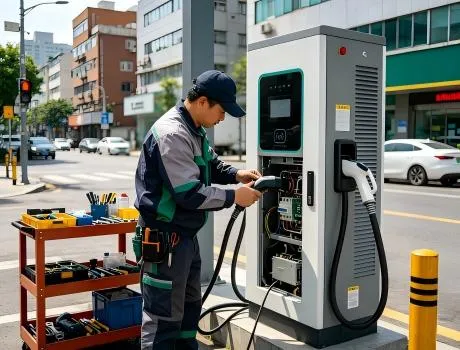
EV fast-charging sites (battery buffers to avoid demand spikes)
Retail stores or hotels with high time-of-use rates
Any business tired of peak demand charges
Final Thoughts
The all-in-one air-cooled C&I storage system hits a sweet spot: affordable, compact, and simple. It won't win a beauty contest against liquid-cooled racks, but it'll shave your peak demand, shift your load, and keep the lights on when the grid fails.
Before buying, check: your peak load profile, available floor space, and local electricity rate structure.
Deployed a commercial storage system? Share your experience below.
 English
 DC Charging Pile
  AC Charging Pile
  Inverter
  Residential Energy Storage
  Integrated Solar-Storage-Charging System
  Commercial & Industrial and Containerized Energy Storage
  Cloud Platform
  Photovoltaic Building Materials