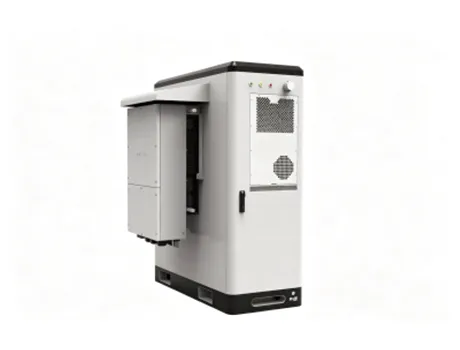
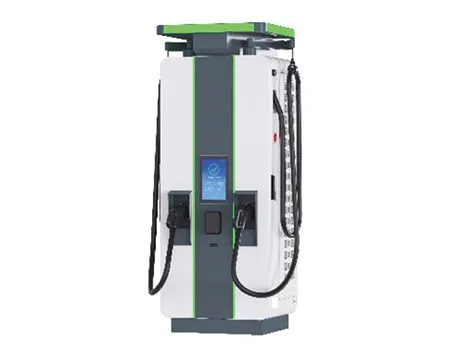
The rapid adoption of electric vehicles (EVs) has accelerated the demand for reliable and efficient charging infrastructure worldwide. As governments promote sustainable transportation and businesses invest in EV charging networks, AC charging piles have become one of the most widely used charging solutions for residential, commercial, and public applications.
Compared with DC fast chargers, AC charging piles offer lower installation costs, easier maintenance, and excellent compatibility with daily charging scenarios. Whether installed in apartment complexes, office buildings, shopping malls, hotels, or public parking facilities, they provide safe and convenient charging for electric vehicle users while helping operators build scalable charging networks. However, with different charging standards, power ratings, and installation environments available, choosing the right AC charging pile can be challenging. Understanding how AC charging works and selecting equipment that matches your project requirements are essential for maximizing efficiency and long-term value. Whether you are planning a residential installation, a commercial charging project, or a public EV charging network, this guide will help you understand how AC charging piles work, how they compare with DC charging solutions, and what to consider when selecting the right equipment for your needs.
What Is an AC Charging Pile and How Does It Work?
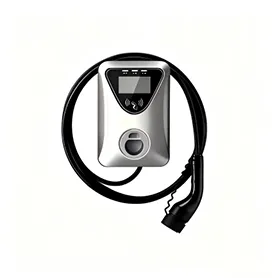
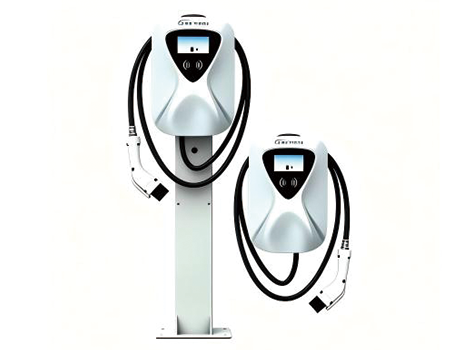
An AC charging pile, also known as an AC EV charger or AC charging station, is a device that supplies alternating current (AC) electricity from the power grid to an electric vehicle. Unlike DC fast chargers, which convert electricity inside the charging equipment, an AC charging pile delivers alternating current directly to the vehicle, where the onboard charger converts it into direct current (DC) before charging the battery.
Because the conversion process takes place inside the vehicle, AC charging piles are simpler in design, more cost-effective to install, and easier to maintain. They are especially suitable for locations where vehicles remain parked for several hours, making them ideal for overnight or workplace charging. Today, AC charging piles are widely deployed in:
Residential communities
Office buildings
Hotels
Shopping centers
Schools and universities
Hospitals
Fleet parking areas
Public parking lots
Modern AC charging piles offer much more than basic charging functionality. Many intelligent features have become standard for commercial charging projects, including RFID authentication, mobile app control, OCPP communication, remote monitoring, dynamic load balancing, scheduled charging, energy statistics, and comprehensive electrical safety protection.
Different markets also require different charging standards. To meet global project requirements, manufacturers generally provide products that comply with regional standards.
Typical configurations include:
Home AC Charger
7~14KW Model A
7~14KW Model B
7~14KW Model C
7~14KW Model D
7~14KW Model E
7~14KW Model F
7~14KW Model L
7~14KW Model M
Choosing the appropriate charging power depends on vehicle type, parking duration, electrical capacity, and expected charging demand. Residential users commonly select 7kW chargers, while commercial facilities often prefer 11kW or 22kW models to improve charging efficiency and accommodate more vehicles.
AC Charging Pile vs DC Charging Pile: Which One Is Right for Your Project?
One of the most frequently asked questions from project developers and charging operators is whether an AC charging pile or a DC charging station is the better investment.
The answer depends largely on how the charging equipment will be used.
An AC charging pile is designed for routine charging where vehicles remain parked for several hours. Since the vehicle itself converts AC power into DC, the charging equipment requires fewer components, making installation simpler and significantly reducing equipment costs.
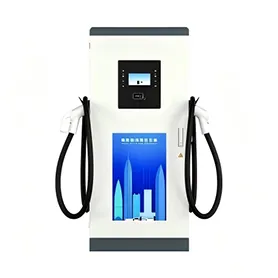
A DC charging station performs the power conversion internally and delivers direct current directly to the battery. This enables much faster charging speeds but also requires more complex equipment, higher installation costs, greater electrical capacity, and more demanding maintenance.
For most residential and commercial applications, AC charging provides the best balance between investment cost and operational efficiency.
Typical applications for AC charging piles include:
DC charging stations are generally more suitable for highway service areas, large public charging hubs, logistics centers, and locations where vehicles require rapid charging within a short period.
As electric vehicle ownership continues to increase, many charging network operators combine AC charging piles with a limited number of DC fast chargers to satisfy different charging requirements while optimizing project investment.
What Should You Consider When Choosing an AC Charging Pile?
Selecting the right AC charging pile involves more than simply choosing a charging power. Every EV charging project has unique requirements based on its installation environment, user demand, electrical infrastructure, and future expansion plans. Evaluating these factors carefully can help improve charging efficiency, reduce operating costs, and ensure long-term reliability.
One of the first considerations is charging power. Residential installations typically require a 7kW charger for overnight charging, while commercial locations such as office buildings, shopping centers, and public parking facilities often benefit from 11kW or 22kW models to accommodate higher charging demand. Choosing the appropriate power rating helps balance charging speed with installation costs.
Another important factor is charging standards and vehicle compatibility. Different markets use different connector standards, including GB/T, Type 2, and SAE standards. Selecting equipment that complies with local regulations ensures compatibility with most electric vehicles and simplifies future maintenance.
For commercial projects, smart charging features are becoming increasingly important. Functions such as OCPP communication, RFID authentication, mobile app control, remote monitoring, load balancing, and energy management enable operators to manage multiple charging stations efficiently while providing a better user experience.
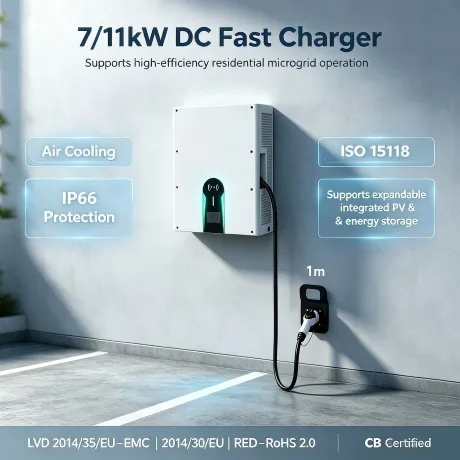
The installation environment should also be considered. Outdoor charging piles should offer reliable protection against rain, dust, humidity, and temperature fluctuations. Products with high protection ratings and comprehensive safety features—including over-voltage, over-current, leakage, short-circuit, and overheating protection—can help ensure stable operation under demanding conditions.
Finally, it is worth considering the long-term scalability of the charging system. As EV adoption continues to grow, many businesses plan to expand their charging networks over time. Choosing AC charging piles that support centralized management, software upgrades, and flexible deployment can reduce future investment and simplify system maintenance.
Conclusion
Whether the application is for residential communities, workplaces, commercial parking facilities, or public charging stations, selecting reliable and intelligent charging equipment is essential for building an efficient EV charging network. Manufacturers with strong engineering capabilities and support for multiple international standards can also provide greater flexibility for OEM and ODM projects, helping customers adapt to the evolving needs of the global EV market. For more details, please view our products or contact our team.
FAQs
What is an AC charging pile?
An AC charging pile supplies alternating current from the grid to an electric vehicle. The vehicle’s onboard charger converts it to DC to charge the battery. It is simpler and more cost-effective than DC fast chargers.
When should I choose AC charging instead of DC fast charging?
AC charging is ideal for locations where vehicles park for several hours, such as homes, offices, hotels, and shopping centers. It offers lower installation and operating costs for everyday charging needs.
What power ratings are common for AC charging piles?
Residential users typically choose 7 kW chargers for overnight charging. Commercial sites often prefer 11 kW or 22 kW models to serve more vehicles efficiently.
Are AC charging piles safe for outdoor use?
Yes. Quality outdoor models feature high protection ratings against rain, dust, and temperature changes, plus multiple safety functions such as over-voltage, over-current, leakage, and short-circuit protection.
What smart features should I look for in a commercial AC charger?
Useful features include RFID authentication, mobile app control, OCPP communication, remote monitoring, dynamic load balancing, and energy management for efficient multi-station operation.
 English
 DC Charging Pile
  AC Charging Pile
  Inverter
  Residential Energy Storage
  Integrated Solar-Storage-Charging System
  Commercial & Industrial and Containerized Energy Storage
  Cloud Platform
  Photovoltaic Building Materials